Project
Part of Building a personal brand with AI
A multilingual website, and this multilingual site, in five languages.
3 min read
Visitors from Italy, France, Germany and Spain were reading the site in English. I built a multilingual website, this multilingual site, in their languages, then asked people I trust whether it sounded natural.
Personal projectProduct lead2026
Three actions
Meet visitors in the language they think in. Visitors from Italy, France, Germany and Spain were reading my site in English. Check where your audience comes from and give them their own language.
Plan for human review, not just the build. The AI did its part in hours. Native speaker review was the hardest and slowest part, and the one that mattered most, so put that time in the plan.
Ask reviewers one clear question. I asked native speakers I trust a single question: does it sound natural, or does it read like a translation? It tells you straight away whether the words land.
- more languages
- 4
- home page follows the browser
- v2.4.1
- when that went live
- 3 Nov 2026
The problem
I built a multilingual website, this multilingual site, because visitors from Italy, France, Germany and Spain were reading the site in English. The words were mine, but not in the language they think in. I think that is a poor welcome.
What I built
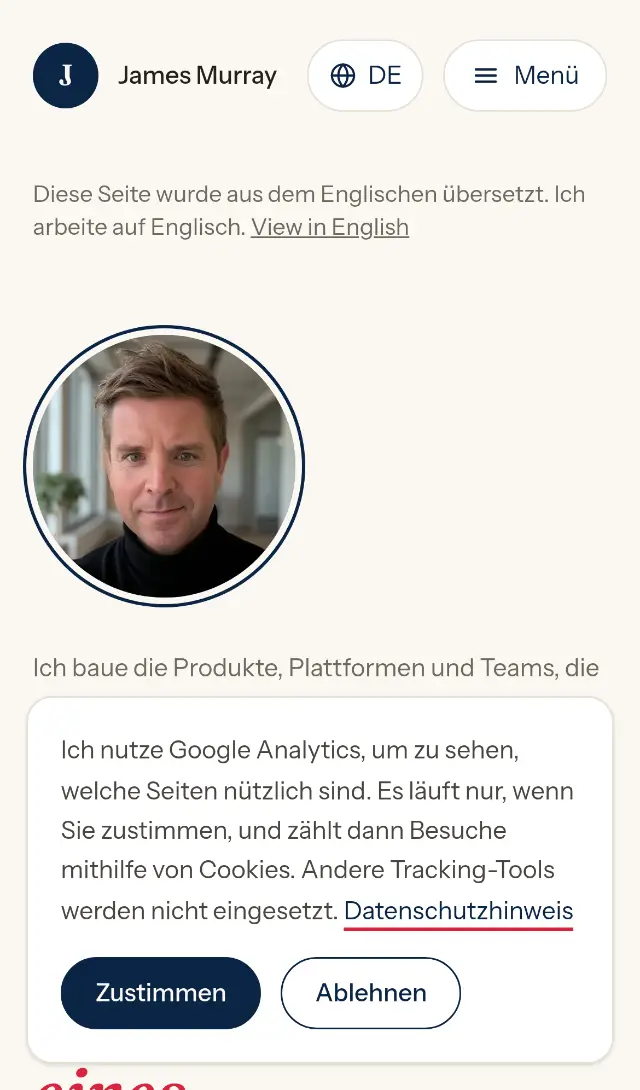
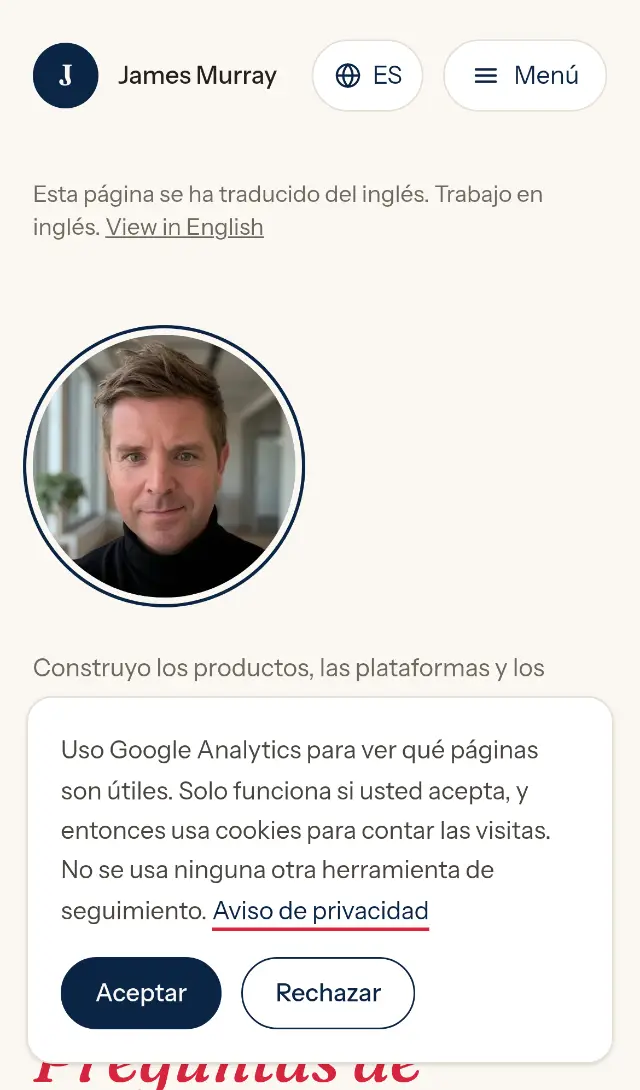
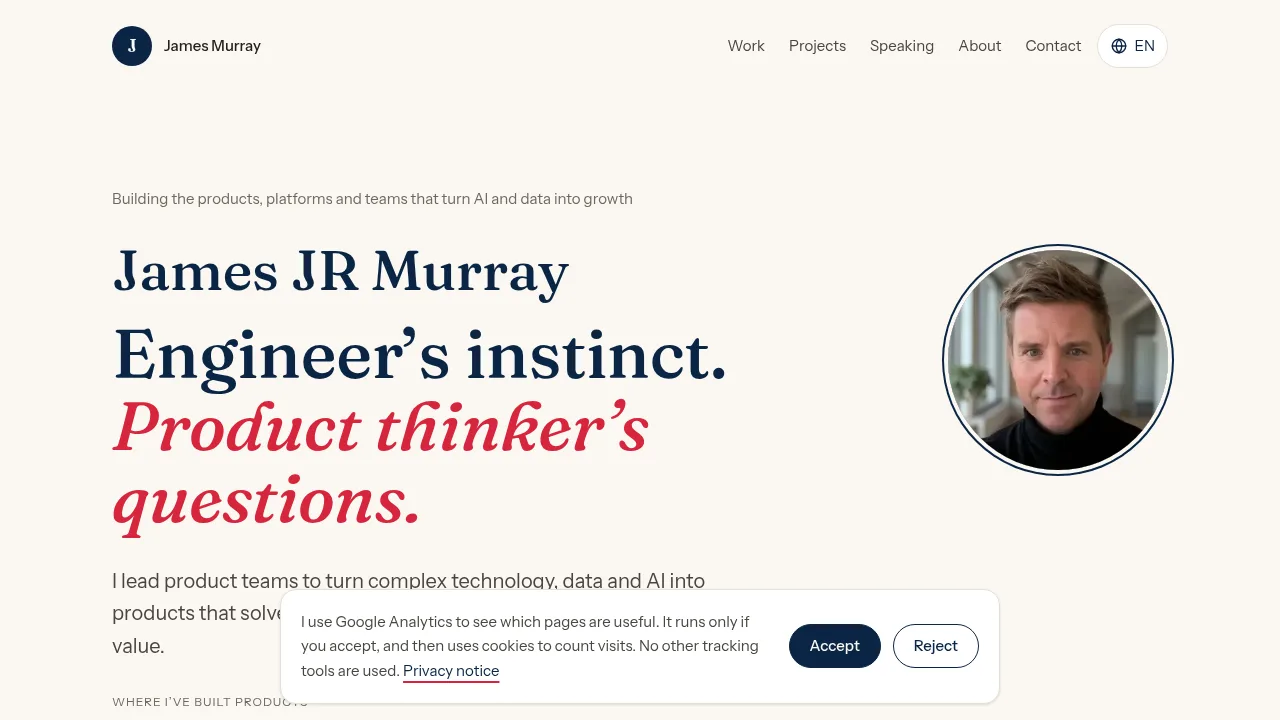
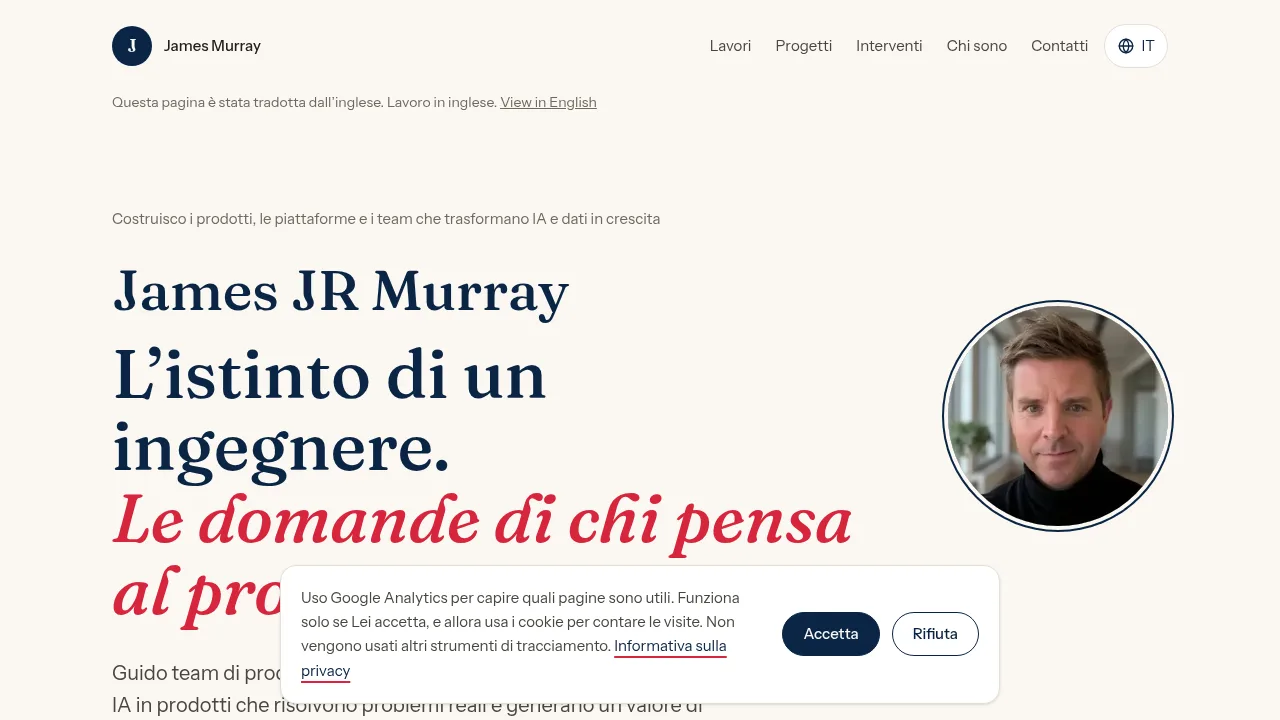
I built Italian, French, German and Spanish versions of the site.
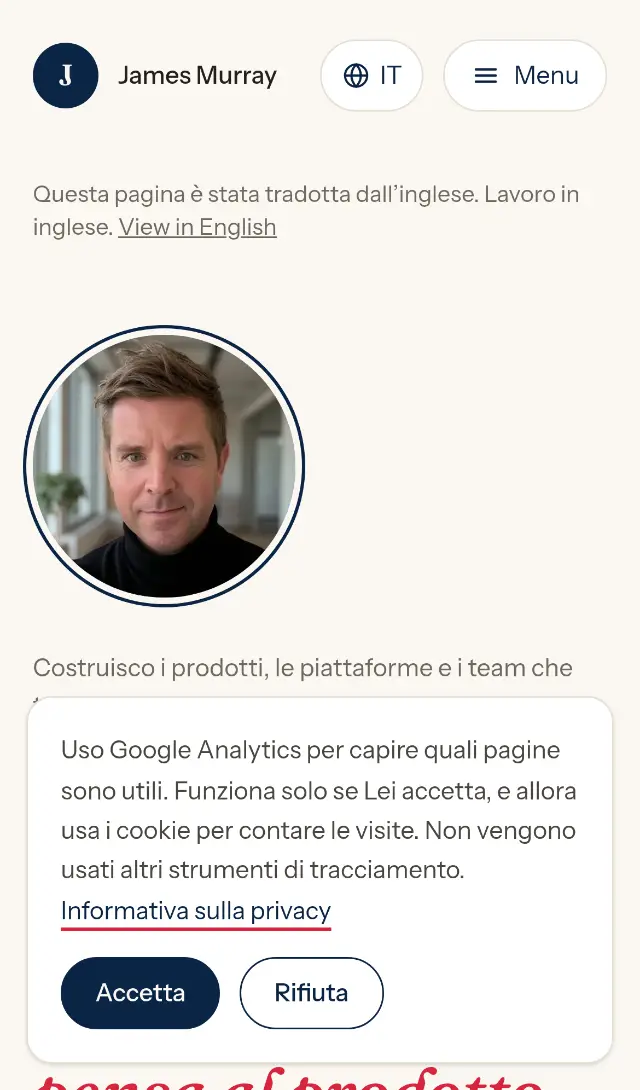
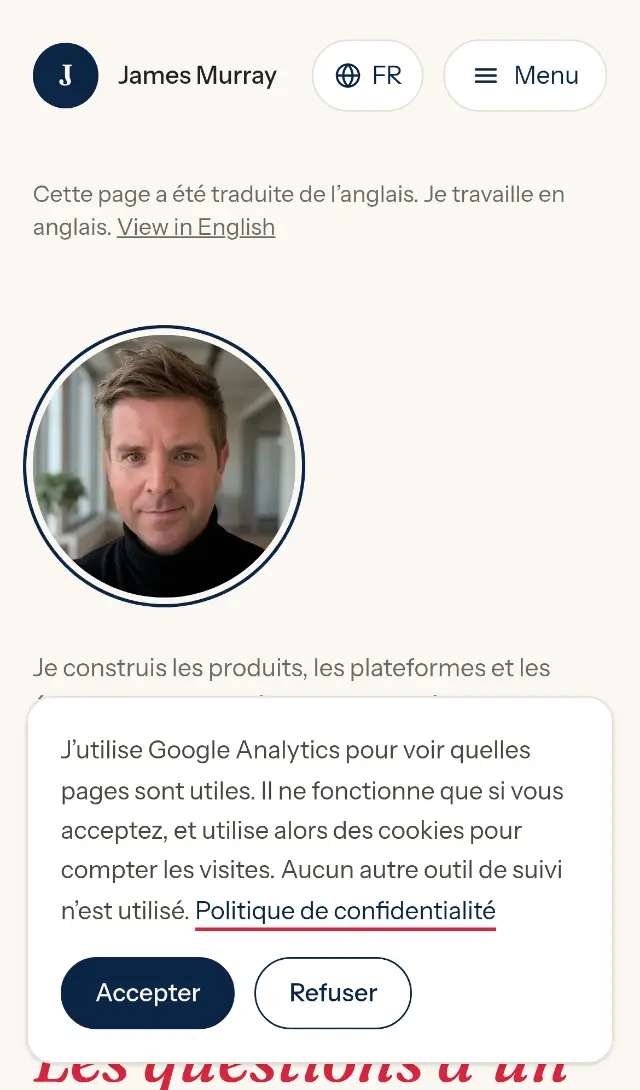
Then the home page started choosing the language itself. That shipped in v2.4.1, live on 3 Nov 2026. If a visitor’s browser is set to Italian, French, German or Spanish, the home page opens in their language. Everyone else gets English. Search engines get English too. A one-tap switch goes back to English.
Under the hood, the pages carry hreflang, x-default and canonicals. Crawlers are never redirected.
The tools
At Holiday Extras we use Claude and Codex. For my personal projects I use Grok and Claude. I switch between them all the time.
I’m not tied to a tool. I’m tied to solving the problem.
A human in the loop
I sent the dev version to native speakers I trust, to check the tone. A friend in Italy, Jerome in France, Marvin in Germany and my brother in Spain. I asked them one question. Does it sound natural, or does it read like a translation?
The human feedback was the hardest and slowest part, and the one that mattered most. The AI did its part in hours.
What I learned
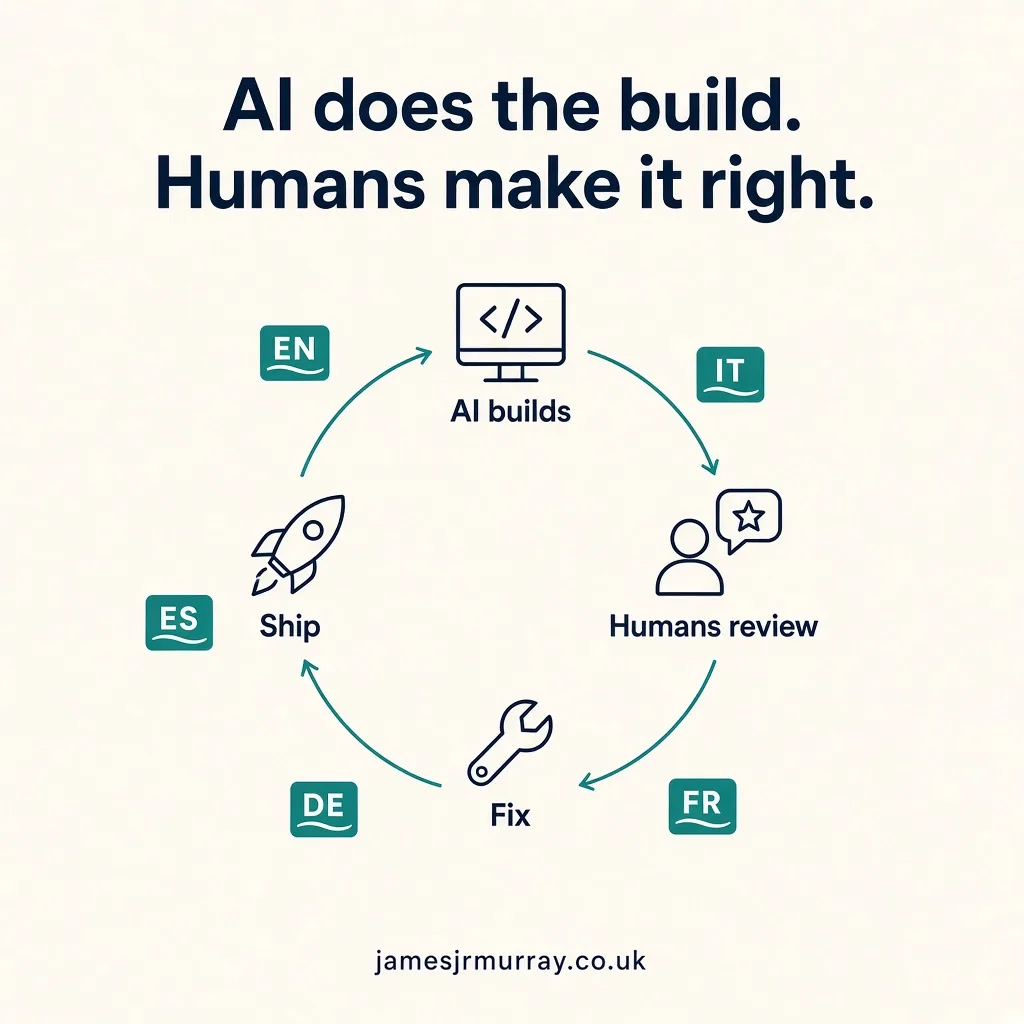
AI does the build. Humans make it right. If you’re planning an AI project, plan for the human review time, not just the build.
The longer write-up is How I used multilingual SEO to help more people find my site.
The write-up is how I built this website with AI. The longer write-up is the Toyota Connected Europe case study. See speaking on data readiness for AI.
Questions
- Why add more languages?
- I built a multilingual website, this multilingual site, because visitors from Italy, France, Germany and Spain were reading the site in English. The words were mine, but not in the language they think in. I think that is a poor welcome.
- What took the longest?
- The AI did its part in hours. Native speaker review was the hardest and slowest part, and the one that mattered most, so put that time in the plan.